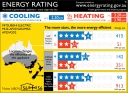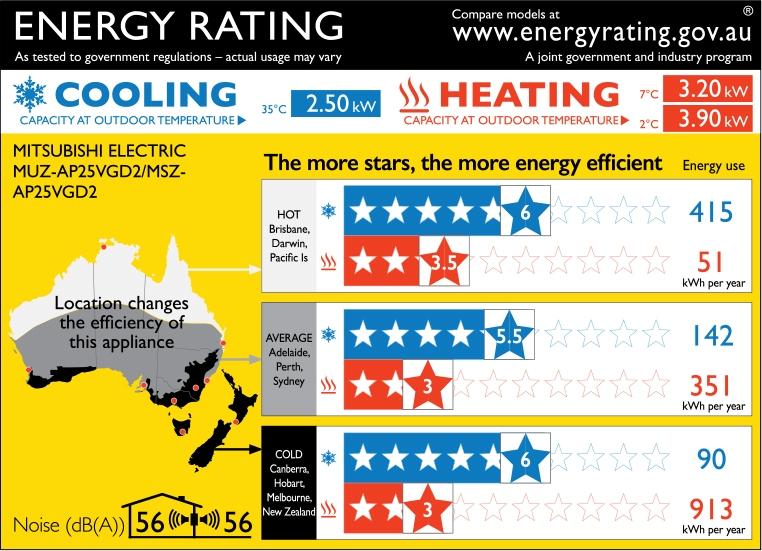
The new Zoned Energy Rating Label (ZERL) looks quite different to the energy rating you may be used to. (below)

A joint government industry program applying to new air conditioning models in 2025 has some added detail to the label.

| 2025 New Zoned Energy Rating Label (ZERL) | |
|---|---|
 |
Brand and Model |
 |
Climate Zones Australia has 3 rating climate zones, hot, average and cold. You can enter a post code at energyrating.gov.au to determine your zone. |
 |
Sound Levels The numbers represent the indoor and outdoor units sound power levels. Lower numbers indicate that the air conditioner is running more quietly. |
 |
Cooling Capacity Cooling capacity (kW) when the indoor unit temperature is 27°C and outdoor temperature is 35°C |
 |
Heating Capacity Heating capacity (kW) when the indoor unit temperature is 20°C and outdoor temperature is 7°C and 2°C |
 |
Star Ratings The stars indicate how efficient the air conditioner will perform in the three separate climate zones. The more stars, the more energy efficient. |
 |
Energy Usage It shows you how much energy the air conditioner uses for cooling/heating per year. The lower the kW/h used, the less expensive it is to run. |
Why Your Appliance's Star Rating Matters More Than Ever
With electricity prices more than doubling over the past decade, the energy star rating on your appliances has never been more important. A refrigerator running 24 hours a day, 365 days a year is one of the biggest contributors to your household electricity bill - and the difference between a 2-star and a 5-star model can be hundreds of dollars annually.
A well-maintained appliance also runs more efficiently than a neglected one. A refrigerator with dirty condenser coils, a washing machine with a worn door seal, or a dryer with a blocked lint filter all use more energy than they should - and cost you more every day they run.
- Refrigerators - Clean condenser coils annually and ensure door seals are intact. A fridge working harder than it needs to runs longer cycles and uses significantly more power.
- Washing Machines - Cold water washing uses up to 90% less energy than warm or hot cycles for most modern detergents.
- Dryers - Consider upgrading to a heat pump dryer, which uses up to 50% less energy than a conventional vented dryer.
- Dishwashers - Run full loads only and use the eco cycle where possible - it uses less water and less energy despite taking longer.
- Ovens - Keep oven seals in good condition. A damaged seal allows heat to escape, increasing cooking time and energy use.